Building a College-Ready Pipeline with AP in Alabama
At Auburn University, preparing students for college is a shared responsibility. That idea was at the heart of the inaugural Alabama Higher Education and K–12 Convening, co-hosted by Auburn and College Board. Leaders from across the state’s education community came together to build relationships and explore how access to coursework like AP can set students up for what comes next.
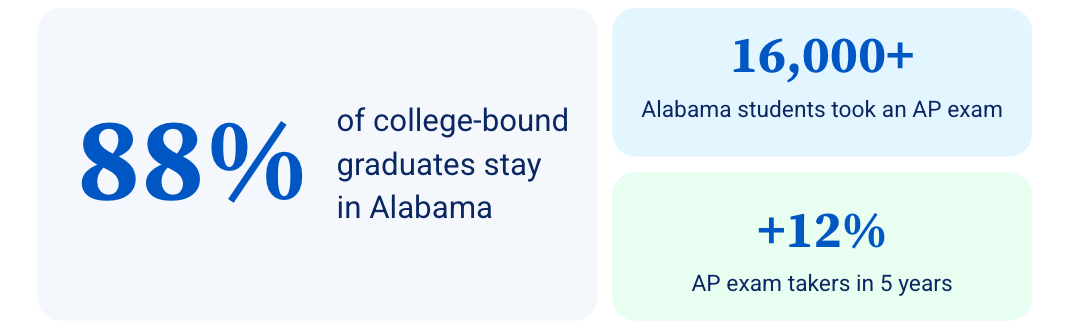
Most college-bound Alabama students stay in the state, among the highest rates in the country, so the preparation they receive in high school follows them straight to Alabama campuses. That makes readiness matter both to students and to the colleges working to meet their enrollment goals. Rigorous coursework is one way schools help students hit the ground running, and College Board research links AP participation, even in a single course, to stronger first-year grades and on-time graduation.
Access to that kind of coursework was a key thread running through the day. College Board offered a statewide look at who goes on to college, who can reach demanding coursework, and where opportunities and outcomes differ. Two AP Precalculus teachers outlined how they equip students for college math in their own classrooms and open the door to advanced courses more widely. In the afternoon, smaller groups got practical, sketching ideas on coursework, advising, and lasting partnerships that schools and colleges might try.
Conversation also turned to how AP and dual enrollment each prepare students for further study. Participants emphasized that schools and colleges need to be clear with students and families about what college expects, so families can plan with the full picture. That kind of clarity grows from relationships, which is why the convening made those connections a priority.
“Each of us sees a different part of the student’s journey. When K–12, higher education, and state leaders work separately, we define rigor and readiness in our own ways, and students fall into the gaps between those definitions.”
Dana Wright Marshall
AP, International Baccalaureate and Specialty Schools Coordinator, Birmingham City Schools
Convening Ideas
- Teacher Pipeline: Leaders in K–12 and higher education join forces to bring more teachers into Alabama’s classrooms, expanding the pool of educators.
- Professional Development: Higher education faculty share subject expertise and teaching practice with AP teachers, strengthening instruction in the classroom.
- Vertical Alignment: High school teachers and college faculty align course content, building a smoother transition between the two.
- Advising and Early College: Schools and colleges advise students together and open earlier routes into college, easing the move from high school.
This gathering marks the start of an ongoing conversation, with opportunities for future collaboration between Alabama’s K–12 and higher education communities.
“We want students to arrive at college prepared to succeed. Our partnerships with K–12 educators are an important part of that work, helping us better understand students’ experiences and how we can support their transition to college.”
Joffery Gaymon
Vice President for Enrollment Management, Auburn University
About Auburn University
- Institution Type: Public, land-grant research university
- Location: Auburn, Alabama
- Founded: 1856
- Student Body: ~28,000 undergraduates
Higher ed is leaning into K–12 partnerships to grow the college-ready pipeline, and AP is a go-to vehicle. Explore the AP for Higher Ed webinar series to learn more.